東京都調布市・京王線調布駅東口徒歩0分の清野鍼灸整骨院ー肩こり・腰痛から骨折・体調不良までご相談ください。

 休日木曜・日曜・祝日
- 院長ブログ
Proposal of the New English Term: Acumoxist 鍼灸師 (Acupuncturist/Moxibustionist)(新しい用語の提案英語版)

We would like to propose the new term “Acumoxist” to the world!
In Japan, harishi はり師 (acupuncturist) and kyushi きゆう師 (moxibustionist) are official nationally licenced professional titles.
Currently, there is no single English term that represents both an acupuncturist and a moxibustionist.
In recent years, particularly in China, the term “Acumoxology” has been used to refer to acupuncture and moxibustion. This term appears to emphasize research in acupuncture and moxibustion medicine and is often interpreted as “the study of acupuncture and moxibustion.” Correspondingly, the term “Acumoxologist” is used to describe a person engaged in research in this field, in other words, “the researcher in acupuncture and moxibustion medicine.”
However, when introducing oneself as a researcher in acupuncture and moxibustion medicine, saying that “I am an acumoxologist” feels awkward and is difficult to pronounce. Furthermore, using the term “Acumoxologist” interchangeably with “acupuncturist/moxibustionist” as a professional title seems lengthy, difficult to pronounce, and unnatural. For Japanese people who struggle with English or non-native English speakers, pronunciation can be challenging.
Perhaps the terms “Acumoxology” or “Acumoxologist” might be more suitable when referring specifically to researchers. These terms tend to imply individuals engaged primarily in academic research rather than clinical practice. In fact, in countries such as Sweden, many researchers in this field do not practice acupucture and moxibustion clinically, making these terms appropriate in that context.
In Japan, practitioners who hold both national licenses – harishi はり師 (acupuncturist) and kyushi きゅう師 (moxibustionist) – are commonly referred to as “shinkyushi 鍼灸師(acupuncturist/moxibustionist).” When introducing ourselves overseas as “harishi はり師” and “kyushi きゅう師,” saying “I am an acupuncturist and moxibustionist” feels lengthy and difficult to say. Thus, many Japanese practitioners say “shinkyushi 鍼灸師” when speaking to fellow Japanese and say “I am an acupuncturist” when speaking to non-Japanese practitioners. I assume that many non-Japanese practitioners living overseas do the same.
For these reasons, I would like to propose the new English term “Acumoxist.”
This term was developed in collaboration with Riki Kajiwara, who grew up in Canada and has been a core member of the team developing the Seino Medical System textbook since January 2024. Riki Kajiwara first began using the term “Acumoxist” on social media in April 2024. “Acumoxist” means “Acupuncturist/Moxibustionist.”
At the seminar overseas, I use the term “Acumoxa” when referring to acupuncture and moxibustion. This term gives the impression of gently kneading moxa when practicing tenkyu 点灸 (point moxibustion). Recently, westerners called the Chinese acupuncture and moxibustion “TCM (Traditional Chinese Medicine)”, and Japanese acupuncture and moxibustion “Shinkyu.” It feels natural to use Japanese terms when referring to something unique to Japan, such as sushi, anime, and karaoke, etc.
Nevertheless, the common language of the world is English. Based on the discussion above, we suggest the following terms:
鍼灸 (Acupuncture and moxibustion): “Acumoxa/Shinkyu”
鍼灸師 (Acupuncturist and moxibustionist): “Acumoxist/Shinkyushi”
はり師 (Acupuncturist): “Acupuncturist/Harishi”
きゆう師 (Moxibustionist): “Moxibustionist/Kyushi”
I sincerely hope and strongly encourage those who agree with these terms to begin using “Acumoxa” and “Acumoxist.”
Wednesday, February 4, 2026
Japanese Acumoxist SEINO Mitsunori
At the 1990 World Congress of Acupuncture and Moxibustion in France, Mitsunori Seino coined the term “Guide Tube” as no established English term for shinkan 鍼管 existed. Today, this term is widely used. In recent years, Seino has been differentiating the characters “鍼” and “針” as they are used interchangeably when referring to acupuncture in Japan. Seino differentiates the two by using the character “鍼” upon explaining the acupuncture techniques, and “針” upon referring to the tools of acupuncture. At the seminars overseas, Seino would first introduce shinkan 針管 in Japanese, then say “SHINKAN means Guide Tube.” It has been a while since we last proposed a new English term.
【Trivia for Japanese Readers】
Since ancient times, Japan has not had a formal licence for “shinkyushi 鍼灸師 (acumoxist).” During the Edo period (1603 to 1868), acupuncture was known as shinji 鍼治 and moxibustion as kyuuji 灸治 among the civilians. Practitioners of shinji 鍼治 were called harii-san 鍼医さん or shinji no oisha-san 鍼治のお医者さん, and practitioners of kyuuji 灸治 were called kyuuji no oisha-san 灸治のお医者さん.
On March 25, 1885, the Acupuncture and Moxibustion Practice Permit Regulations 鍼灸術営業差許方 were issued, followed by the enactment of the Acupuncture and Moxibustion Practice Control Regulations 鍼術灸術営業取締規則on August 14, 1911. However, these regulations did not establish a formal licence.
On October 9, 1926, “Petition Concerning the Enactment of an Acupuncturist and Moxibustionist Law 鍼灸師法制定ノ請願ノ件” was submitted to the National Diet of Japan国会, and on July 13, 1927, “Petition for the Enactment of an Acupuncturist Law 鍼灸師法制定請願ノ件” was submitted. However, a formal licensing system for shinkyushi鍼灸師 (acumoxist) or shinkyu-ishi鍼灸医師 (acumoxa doctor) was not established.
In 1931, “The Petition Concerning the Establishment of an Acupuncture and Moxibustion Physicians Act 鍼灸医師法制定ニ関スル請願ノ件” was submitted, and it was deliberated in both the House of Representatives 衆議院 (Shugi-in) and the House of Peers 貴族院 (Kizoku-in). The outcome stated that “appropriate investigations concerning revisions to the relevant regulations will be continued 関係規則ノ改正等ニ付テハ相當調査ヲ續行セムトス.” However, while the matter remained under continued deliberation, Japan’s national system changed with the transition from the Constitution of the Empire of Japan 大日本帝国憲法 to the Constitution of Japan 日本国憲法.
“The Act on Anma Therapy, Acupuncture, Moxibustion, and Judo Bone-Setting Therapy Businessesあん摩、はり、きゆう、柔道整復等営業法” was promulgated as a subsidiary legislation of “the Regulations for the Accreditation of Training Schools and Facilities for Anma Therapists, Acupuncturists, Moxibustionists, and Judo Bone-Setting Therapists あん摩師、はり師、きゆう師、柔道整復師学校養成施設認定規則” established in 1948. Therefore, the first formal licences established in Japan were harishi はり師 (Acupuncturist) and kyushiきゆう師 (Moxibustionist).
[ 2026.02.07 ]

受付時間
| 治療時間 | 〈午前〉 9:20~12:20 |
〈午後〉 3:00~6:00 |
|---|---|---|
| 月 | ○ | ○ |
| 火 | ○ | ○ |
| 水 | ○ | ○ |
| 木 | ヨーガ教室 | ━ |
| 金 | ○ | ○ |
| 土 | ○ | ○ |
| 日・祝 | ━ | ━ |
042-481-3770東京都調布市布田1-45-1
CIELO 3階
-
 治療の流れお問い合わせから
治療までをご紹介 -
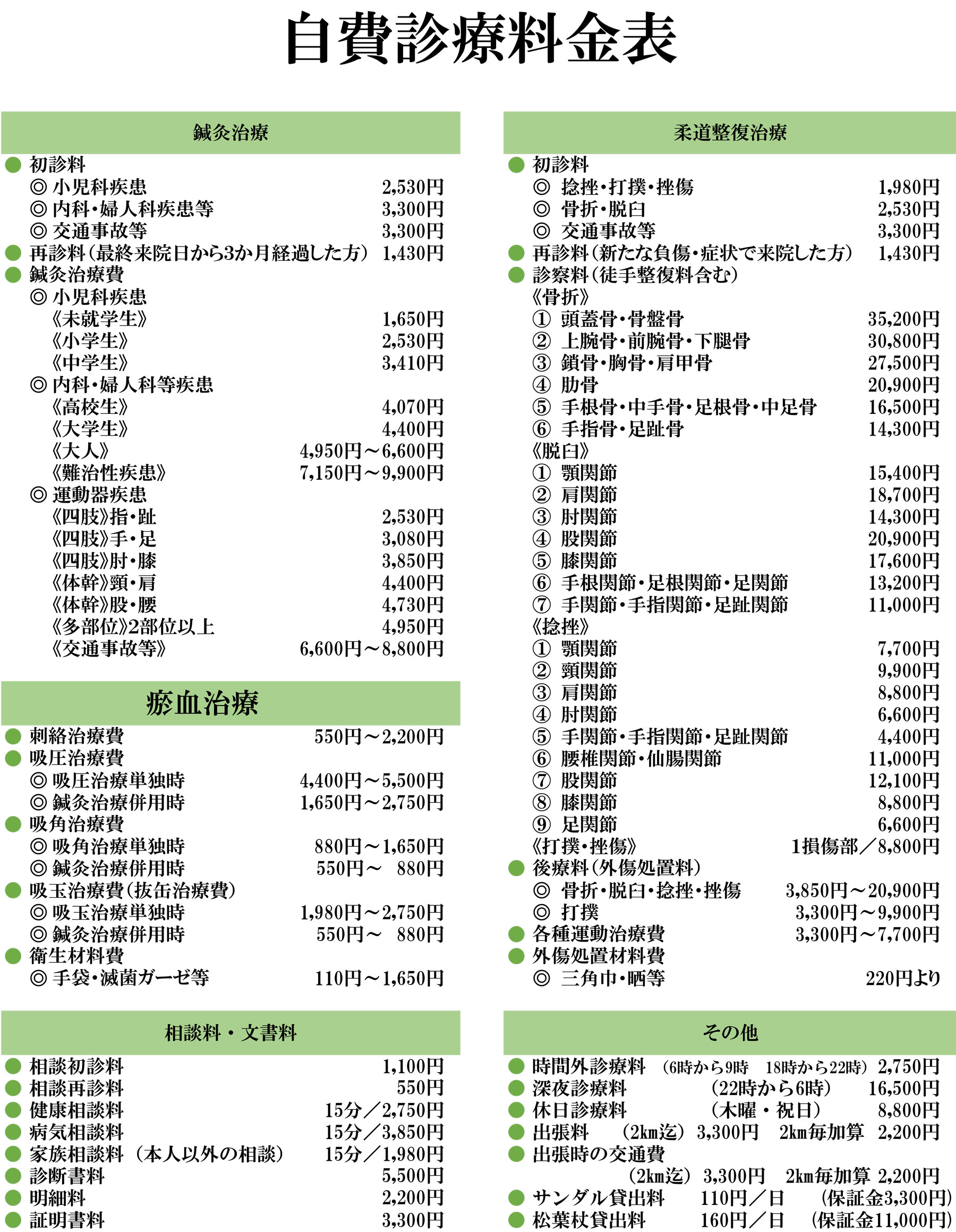
 料金表代表的な施術とその
料金表 -
 当院のご案内営業時間、アクセス、
連絡先のご案内 -
 院長ブログ施術や東洋医学など
役立つ情報ページ -
 メディカルヨーガ
運営理念、
各コースのご案内、
会員特典のご紹介